

Calling Whanganui
We danced with the ghost of a whale


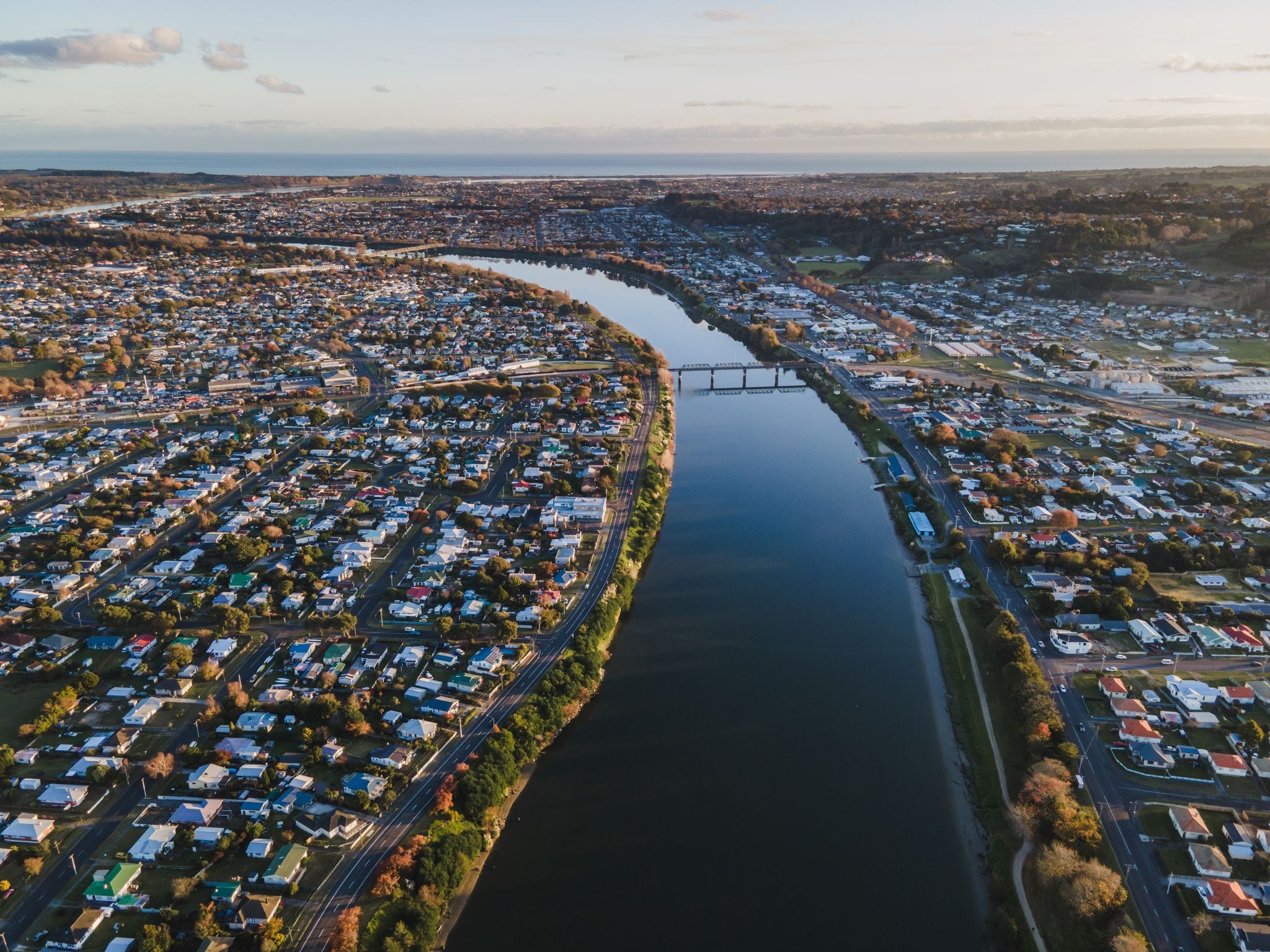
Whanganui is a city, and the Whanganui is a river.1 The city is home to around 40,000 souls, plus one: the river has famously been granted legal personhood. On the day after Thanksgiving we drove into town in a tired summer twilight, and the river was the first soul we met.
We needed the welcome. Our secret American feast had turned to its lonely comedown. Other drivers on the road from Palmy, the fishermen down by the bridge, the boys doing manus off a downtown dock—to them it was just another Friday. The river, though, dozing wide and brown between its concrete banks—the river knew.
We checked into an Airbnb in a quiet suburb and slept off the last of the pie. The next morning we took the kids to the farmer’s market along the old tram tracks by the river. On the riverbank there’s a big silver sphere, a miniature tribute to Chicago’s lakefront Bean.2 The Whanganui version has a strange cut in the side, as if it were a giant sleighbell. The cut is a silhouette of the river’s path from its birthplace among the North Island volcanos down to its Whanganui mouth and the Tasman Sea. The river looks super cool, like a wild snake coiled around the sphere’s equator. The sea is just a straight line at one end.
Walking up from the river along Drews Avenue we discovered the Mystery Phone? The question mark is an invitation. You push the buttons and recorded voices tell the history of the town. Jenny managed the kids’ turn-taking while I parked the minivan. I didn’t try it myself but the kids thought it was pretty cool. They’ve never known a world where you received information by holding still in one fixed spot, as if in prayer.
We never taught them to pray, either. But that’s another letter.
The souls of Whanganui were kind to us. The waiter at breakfast swore he heard us talking work; I could definitely claim the expense. The dude at the vintage shop—wild patterned shirt, a complicated salt-and-pepper mustache—said he’d see us at the show that night. In the afternoon we joined a procession of families from kid dinner at the hipster burger bar to kid dessert at the ice cream shop, where a dad chatted us up as if we were already neighbors. They’d moved down from Hamilton just to afford a house. “Best kept secret in New Zealand, I reckon.”
I did go to the show. Go where you’re invited, that’s the rule. I left Jenny with the sleeping kids and once again parked the minivan downtown. The streets were all but empty—there is no silence like a weekend night in a small New Zealand city—but I spotted a pair of young lovers strolling up the hill, heads together and dressed in draping black, each carrying a bottle of wine.
I tailed the lovers to the Whanganui Musicians’ Club, where local bands were throwing a benefit for Palestine. The Musicians’ Club seemed at first just another example of New Zealand’s beloved community halls: the worn wooden floor, the kitchen with instructions taped to the fridge, the door left open all night.3 A band wailed away on the low stage. The show was BYO—the lovers knew—and around the walls had gathered a cheerful moraine of Woolworths bags and six-pack boxes. I sipped free water from a red paper cup and talked Phoenix Suns basketball with the volunteer doorman.
Next up was a surf-rock band called Space Trash. They were great! The small crowd jittered and bopped around the floor. At one point the lead guitarist leapt from the stage to join them. Fans danced around him as he soloed, and one even reached over and unbuttoned the guitarist’s shirt—one button, two, then three. The guitarist held still for his undressing but never missed a beat. I would’ve filmed the whole thing. But not a soul took their phone out, so I didn’t either.
Between sets I chatted with a friendly retiree three years up from Masterton. “We wanted more,” he said, gesturing with his paper cup at the crowded dirt yard outside the club. He directed me to Dancing Dave. Everybody knows Dancing Dave, he said. He’s from Arizona, too.
I found Dave in the darkened yard out back, checking the time on his vape. He wore a feathered fedora on his head, a peace medallion around his neck and a white beard braided down from the chin. Alabama, he said, not Arizona. His ex-wife, though—she was from Arizona. They’d met on the shuttle bus to Lost Wages, as Dave called Las Vegas. She was pretty cute. “I wouldn’t kick her out of an airplane.” But Reagan was president, the nuke plant in Alabama caught on fire, and the young couple bailed for New Zealand. She left him for Wellington not long after. Still, he was happy here, all these decades later, even though New Zealand had changed. “When we got here you could drink from any river in the country. These days it’s only a couple streams way up in the mountains somewhere, and who’s gonna go up there?” He clapped me on the shoulder. “Now it’s just a big shithole. But it’s the best shithole in the world.”

On Sunday morning I dared to try the Mystery Phone? myself. My god, the tech nostalgia. The heavy receiver in my hand. The sturdy leash of the cord.
I pushed the button labeled “Whale on a Train.” A voice spoke in my ear:
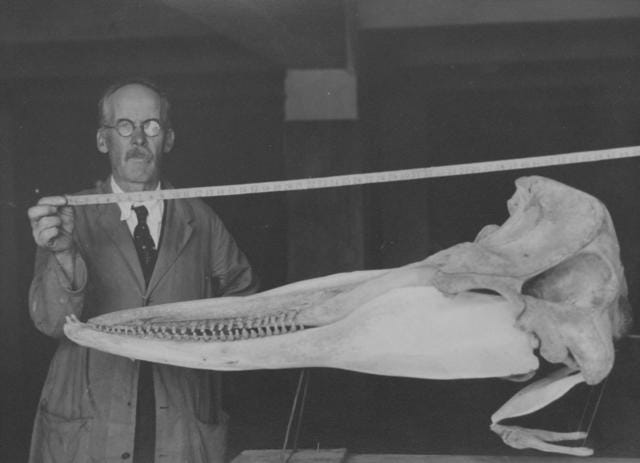
In November of 1933 a whale beached up the coast at Hāwera. The director of the Whanganui Museum, a man named George Shepherd, wanted the specimen for his collection. He traveled up the coast, dismembered the carcass, and shipped it home on the train. Back in Whanganui, he secretly laid the whale parts out on the museum’s roof to finish decomposing. Neighbors complained, but no one could place the smell. Once clean and dry, the skeleton was his museum’s centerpiece for years.
Then the Mystery Phone? told me Shepherd’s museum is now the Whanganui Musician’s Club. At the Saturday show we’d danced under the ghost of a rotting whale.
Today the skeleton lives across the street in the present-day Whanganui Museum. Turns out the whale was a whole new species, which Shepherd proudly named for himself: Tasmacetus shepherdi. Halfway down its spine any non-scientist can easily spot two swollen, deformed vertebrae. This spinal defect may have killed the whale. We cannot know for sure. In his museum photos Shepherd looks flinty, doubting. The whale herself says nothing.
Downstairs there’s an exhibit dedicated to the history and culture of the Māori iwi who have long called the Whanganui River home. As befitting its status, the river speaks from every placard in the first person: “I am a river system that consists of many elements and communities, who need to work together to heal me.”
Same same. I read too much fiction. Feed me any story and I will don the I.
The artifacts, too, raise their hands to speak:4
“I am a hīnaki (eeling basket).”
A paddle: “I am made from dark wood, with a plaited muka cord tied around my handle.”
Three rocks with holes bored right through their hearts: “We are fishing sinkers, made of coarse grey stone.”
We are indeed.
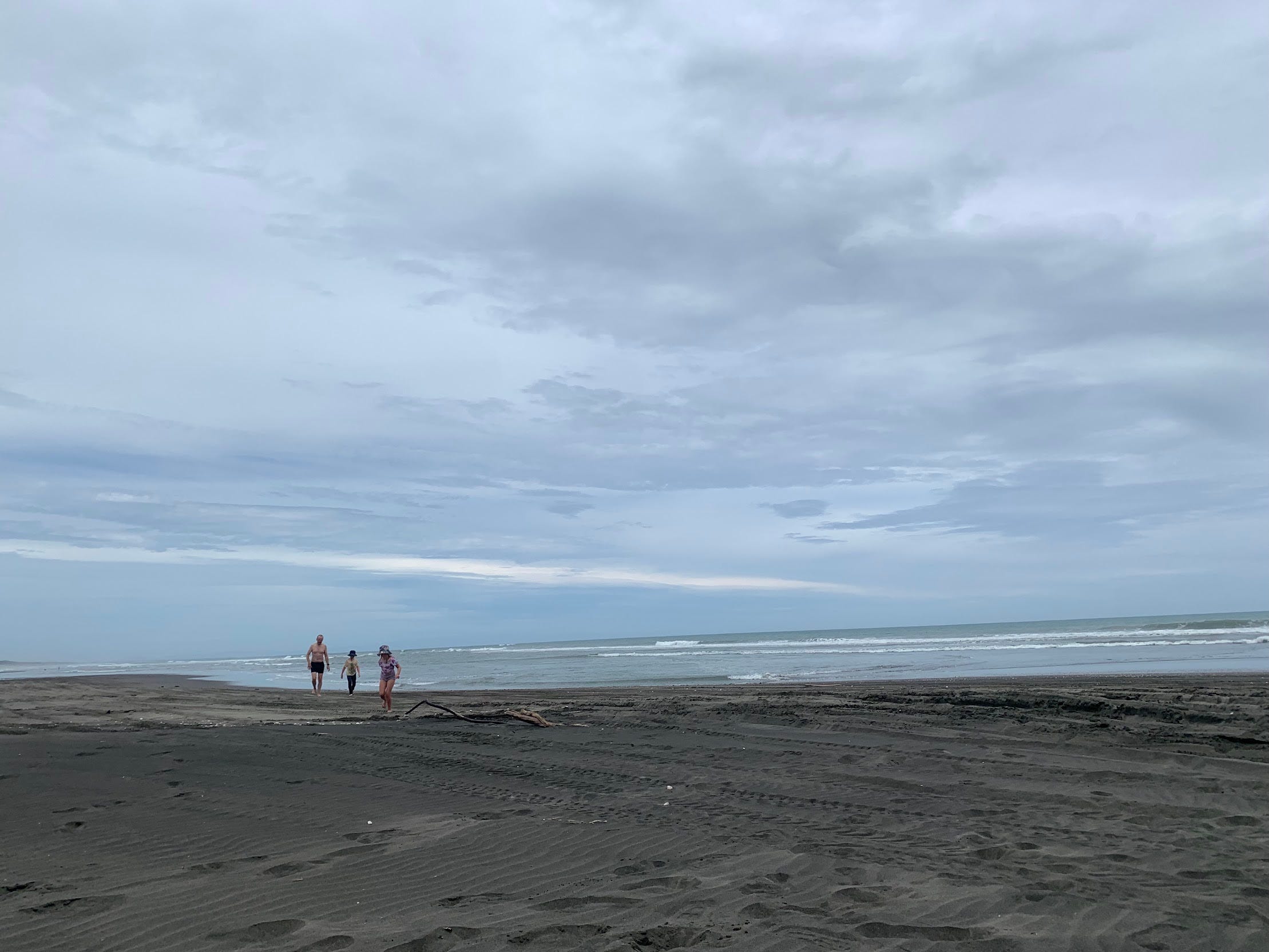
My kids were tired and ready to leave, but as we crossed river towards home I called a final stop at the beach by the airport. One cannot visit a coastal river town without meeting both river and sea. That’s the prayer, kids. The river completes the trip, and so shall we.
We shuffled out through the dune grass. Sunday drivers zipped by on dirt bikes. I stripped to my shorts. The kids walked fully dressed into the waves. //
On New Zealand’s community halls:

The wh- is a soft f sound in te reo Maōri. For many years the town and river were both known by the misspelled and semi-anglicized ‘Wanganui.’ The river recieved its h in 1991; after a doubtless confusing interval in which both spellings were officially accepted, the town added its own in 2015. Maybe this is appropriate: Whanganui means ‘the long wait,’ and comes from an old story about a Maori chief waiting to cross the river “while in pursuit of his wife.” On our first visit in January 2021, the distinction still felt contested, and we spotted the odd h-less sign. This time around the question seemed settled.
Bearing, by David McCracken, was installed in 2011. The Bean, officially Cloud Gate by Anish Kapoor, dates from 2006. McCracken’s got his own thing going, but it’s hard to imagine a sculptor working on a public commission who didn’t know Kapoor’s work. There’s a longer piece here about US/Kiwi influence and the challenges and duties of location-specific public art. See Miwon Kwon’s great One Place After Another.
A kind reader points out that this particular hall is a classic Kiwi artifact in the icky colonial way, too.
These artifacts are all taonga, or sacred cultural treasures. As is customary, the museum docent instructed us not to take any photos in the downstairs gallery. I find such bans sharpen the museum experience! No photo of mine can capture the aura of an eeling net, or a whale skeleton, for that matter. The quotes are taken directly from the placards.
I'm so grateful for the way you describe Whanganui, and Aotearoa in general, as if it somehow magically appeared, full-blown, moments before you arrived - and (lol) as if there are somehow actual seasons. By now you know anything can happen weather-wise anywhere. In Aotearoa it's always Stick Season somewhere.
Have you been to Bushy Park (just a click or two out of town) - now there's a place with a weird back story and you can camp or BnB in the homestead. Go during the walnut fall and forage pillowcases full along the side roads.
BTW I think everyone in Aotearoa knows someone from Whanganui.
I love Whanganui. My ancestors settled around there, it was my mother's hometown and I spent many school holidays on the family farm. I even volunteered in the museum. I feel closer to Whanganui than to where I grew up in Tauranga. I still have a brother living there and I often fantasise about retiring there in a old villa or a mid-century wonder on top of St John's Hill. The market is a fantastic piece of Whanganui now and I wish the UCOL facilities hadn't shrunk as I think Whanganui could be a great cultural and arts centre.